The earliest European maps were driven by ambition and curiosity - to explore what lay beyond the horizon. But there was a problem.
These maps were stitched together from traveller gossip, church records, merchant rumors, explorers’ own travels, and often, on the whims of whatever a monarch wanted to believe.
A coastline could be a curving mythical serpent. A 10 km deep forest might as well have spanned half a continent full of smurfs in people’s imaginations.
Explorers pieced together all this information themselves and trusted that their version was better than carrying 10 different maps that contradicted each other.
The explorers learned something important: you pick one map, iterate deeply with travel, and navigate with intention using one fully trusted compass.
Because the second you try to follow every map and flawed directions, you get lost before you leave the harbor.
Rudimentary though it was, this method followed the greatest exploration phase in human history - the one we are beneficiaries of until today.
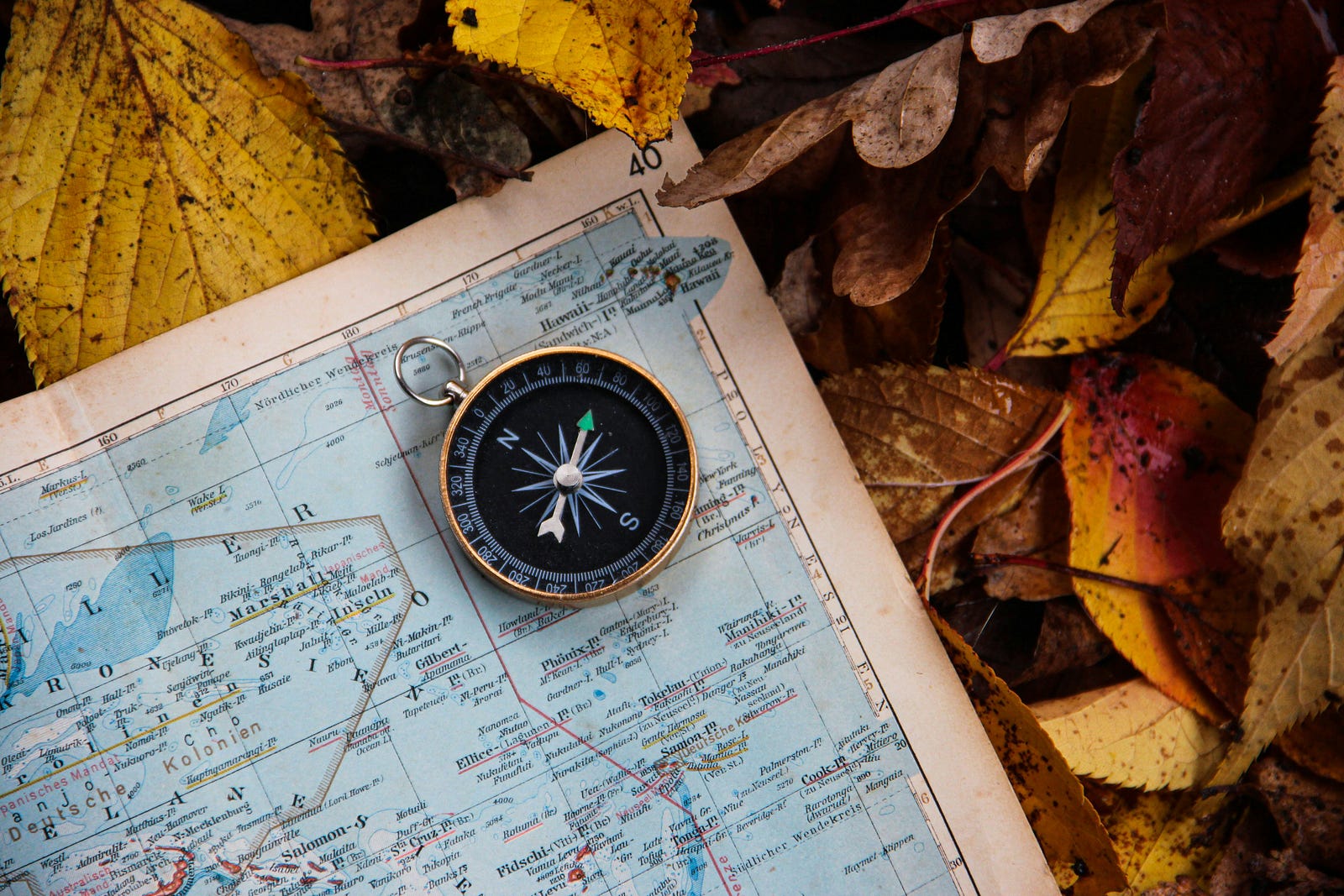
The Map and a Compass were the greatest tools ever created.
Hundreds of years later, a similar problem came up again.
This time, not with exploration across physical borders, but with virtual borders.
The early internet in the 90s was a virtual directionless world without a map or a pointer.
Only the pros would explore to reach the shores of the information they needed.
The rest were virtual peasants not daring to step a foot further into the mythical virtual forest.
The need of the hour was a virtual map and a compass.
Thankfully, two PhD students dared to tackle this problem in 1998, and Google was born.
The first trustworthy map and a compass for the virtual world.

Suddenly, the “website” from another part of the world was merely a search query and a click away. All the peasants could jump in and travel exactly like the pro explorers.
The rest, as they say, is history.
The most ambitious exploration of the web yet, echoing Europe’s 15th-century voyages (minus the harm caused).
The web became a place where everyone was and where everyone could claim a .com territory. Kingdoms were created. Wealth flowed. Society progressed.
Until it all became too much and too fragmented again.
The information connection soon became information overload. And you were back to square one - which direction and which information is to be trusted?
You had to go to multiple scam or SEO sites to piece together the exact information that you wanted, from the sources you could trust.
The curious exploration platform was crumbling under the weight of its own information.
The need of the hour was a better map and a compass.
And there was something just around the corner.
December 2022: The border between the old world and the new – the launch of ChatGPT.
Tech BC (Before ChatGPT) and now.
We got a new map and a compass on steroids (AI).
You could ask as if to a person and get exactly what you need, without the need to land on multiple shores before you reach the final destination.
We had entered a new era of exploration – and we are in the midst of it right now.
But what is the point of all this?
Why do we care?
It is all virtual after all, isn’t it?
The virtual world has a huge impact on the physical world now.
Because our lives are built around the digital world.
Just as a great map and a compass enabled Europeans to travel far and wide in the 15th Century, giving them a huge advantage, a similar combination in the right hands today can give you the competitive edge.
Imagine a person from Australia planning to come to Germany for a week. They would need to find the best deals for flights, the weather conditions to make the most of the trip, and the knowledge of which places to visit in that time frame.
This can take hours online, with scrambling through websites, in which you might still make mistakes.
Or merely minutes with an AI Agent, if it is specifically built for this purpose.
Now, imagine a student wants to do their studies abroad. The normal way of doing research almost breaks them even before they set foot in a new country.
So, is there a purpose-built map and a compass for enabling global educational mobility?
The answer is yes.
Edvi: One Map, One Compass for International Students

A student trying to apply to a university abroad undergoes an immense load.
There isn’t a shortage of information. There is too much of it.
Every university claims to have a clear process. Every government portal insists its explanation is obvious.
Then come the forums, blogs, consultants, friends-of-friends, Reddit threads, and YouTube explainers.
Together they form the digital equivalent of those medieval map archives: an impressive collection of disagreements.
- One page tells you a certificate is mandatory.
- Another page says it’s optional.
- A university FAQ lists deadlines that contradict the faculty website.
Recognition systems use vocabulary that reads like it was written during the Mesopotamian era and only reluctantly translated.
This is exactly why Edvi exists.
A purpose-built AI-based portal for international students: where they can do everything they will ever need to study abroad – from research to application submission.
How does it work?
Edvi charts complexity for you like a map for your study abroad dreams and gives you a compass.
From that point on, you become the explorer.
Where most tools and portals treat the application process as a checklist, Edvi treats it as an end-to-end process.
It has only 3 simple steps:
- Upload documents
- Search and shortlist intelligently recommended best-matched programs for your profile
- Apply to any university anywhere in the world (Currently supported country is Germany; more added rapidly)
That is it.
Step 1. Document Upload
Students upload their documents, expecting another automated form.
Instead, Edvi reads the uploaded documents and understands the context.
- A degree from Mumbai behaves differently in the German system than the same degree in Denmark.
- A transcript from Lagos unlocks different categories in Anabin than one from São Paulo.
- A math course in a Tunisian university is treated differently in Germany.
Most students don’t know this.
Universities rarely explain it.
Edvi makes it visible in seconds.
Step 2. Intelligent search and shortlist to get the best-matched programs for your profile
To be honest, the chaos of global applications was never going to be solved by adding more pages to university websites.
Every institution built its own rules in isolation.
They can’t even standardize their own terminology, let alone coordinate internationally.
Edvi cuts through all that.
Based on the context it has gained from your documents, it shows which requirements apply to which student, and which rules are flexible despite sounding absolute. It decodes ECTS conversion. It turns vague bureaucratic statements into practical steps.
And based on this, recommends the universities most likely to give you success.
Hours of confusing research saved!
Step 3. Apply
Now comes the part every student thinks will be straightforward until they actually start: the application step.
The mythical “final stage” that websites describe like it’s a polite formality. Click here, upload there, send this, done.
Except it’s never that linear.
The moment students begin, they discover that the application step isn’t a step at all.
It’s a branching path with rules that change depending on who you are, where you studied, what your documents look like, and what the receiving university expects.
With Edvi, all of this changes.
Have you shortlisted the universities in the previous step?
Then just pay and apply.
No need to worry about what to fill in which portal.
Edvi’s cutting-edge AI Agent knows exactly on which website to go, what fields to fill, and what documents to submit where.
Not only that: Edvi has a community of experts in the loop.
Experts who have already successfully done their international studies in the country you are applying to.
They review each application after the AI has gone through it, ensuring the best quality.
And within 24 hours, the universities receive the application.
That is it.
Enabling Global Educational Mobility
The more global mobility increases, the more this clarity matters.
Explorers once survived by choosing a single map they believed in.
Students today deserve clarity.
They deserve a guide that doesn’t drown them in options but helps them cross the sea of uncertainty with precision.
Edvi is that guide.
The working map.
The compass that stays steady.
Global education is no longer gated by geography. It’s gated by comprehension.
Edvi gives students the ability to move again with confidence.